Showing posts with label montana. Show all posts

Thursday, April 18, 2013

Dawn Luedecke: To Tame a Montana Heart #western #romance


To Tame a 
Montana Heart
by Dawn Luedecke

Romancing The West welcomes Dawn Luedecke, a country girl born and bred, who has spent most of her life surrounded by horses, country folk, and the wild terrain of Nevada, Idaho and Montana. As a child she would spend many afternoons reading books, watching western classics, and Rogers and Hammerstein movies. When she grew up she decided to leave the quiet country life for a chance to find adventure by serving a successful tour in the United States Coast Guard. During that time she found her soul mate (and alpha male) and started a family and writing career. She enjoys writing historical and paranormal romance and spends as much time as she can working on her current manuscript.

RTW: Thanks for visiting today, Dawn!  You have a new book out, To Tame a Montana Heart.  First, so we know a little more about it, please give us the blurb.

DL: Running from a past of privilege, deceit, and danger, Travis Simms is ready to settle down. What better place to forget all he left behind than the quiet little Montana town of Lolo Hot Springs? His goal is clear — build a hotel and his own destiny without complications — until one of the town's most troublesome women captures his attention. Dusty Larson is hell bent on independence, helping her sister run the Triple D Ranch. The only problem is she seems to attract bad luck and danger... and Travis. Can he tame her wild ways and keep his bachelor status intact — or does he risk losing his heart?

Dawn's running several contests on her month long tour. Stop by her facebook events page for all the contest information.  

RTW: Why do you write Westerns? What aspect of life in the Old West intrigues you the most? Did you work that into To Tame a Montana Heart?

Dawn Luedecke, author
DL:  I write westerns because not only do I love the genre (it’s one of my faves), but I grew up a country girl. The west is an important part of who I am, and I am extremely interested in history. So combining the two just made sense when I decided which genre to dip into.

The old west just seems romantic to me. I love the serene life of the country, but combine that with the simplicity of the old west and you have yourself the perfect setting for a romance. In To Tame a Montana Heart, I tried to capture that feeling.

RTW: If you lived in 1890 what would you visit first? Is there something you’ve been curious about that you can’t find in your research sources?

DL: I would love to visit Lolo Hot Springs when it was in its natural state. Now, it is a resort perfect for the modern day traveler.

RTW: If a person who had never read a Western asked you for a recommendation, what novel or movie would you recommend and why? What did the author do to bring the story alive for you?

DL:  Lonesome Dove, Tombstone, or Young Guns. Lonesome Dove is a classic cowboy movie, and Tombstone and Young Guns are based on real people and real events in history. 

Excerpt of
To Tame a Montana Heart
by Dawn Luedecke

She watched him with care. “I don’t know if I love you. I like you, a lot, but I don’t have the slightest idea what love feels like.” 

Travis’ smile grew slowly across his face. “I understand. I’m not sure if I love you or not, but I also don’t think I could live without you. So you will always have that.” His voice was almost a whisper when he said the last. 

“Truly?” Her voice cracked and she had to force herself to breathe easy. 

“Truly.” 

She inclined her head and took two brisk steps toward him. She leaned over and kissed him with all the fever of a thousand fires. He reached up and intertwined his hand through her hair to hold her still as he plundered her mouth. 

She released him with a shaky breath and jumped back to turn on her heels. “Put something nice on. I’ll be back with a preacher man.” 

“You know, I heard you only have to say ‘I marry you’ three times and then you’re hitched.” 

She threw him a sassy look and slammed the door shut. 
♥ ♥ ♥


Purchase information for 
To Tame a Montana Heart 
Amazon Kindle, Print
BN.com Nook
The Wild Rose Press Ebook, Print


RTW: What’s next? Is To Tame a Montana Heart a part of a series?

DL: Yes! In fact, I am currently working with my publisher to perfect the second book in the Montana Girl Series, titled Big Sky Brazen. It takes off where DeEtte exited To Tame a Montana Heart.

RTW: Anything else you’d like to add?

DL: I am currently on a virtual tour and have several stops and contests along the way. For more information you can always stop by my website or facebook page.

Here is one of the several contests I am doing during my tour. Have fun!

I am featured in an online magazine (pages 26-29), where I give a free sample chapter of the third book in the Montana Girl series!!! I'll give away one free signed book to anyone who can tell me what Daylene (or Justine as she's known in To Tame a Montana Heart) sings.

Click here for a free download of the magazine.

Thanks, Dawn!

Wednesday, September 12, 2012

Conrad Kohrs: Montana's Great Cattle Baron by @MKMcClintockMT

MK McClintock, author
A Brief History of
Conrad Kohrs
Montana’s 

Great Cattle Baron

by MK McClintock
author of Gallagher’s Pride

"The range cattle industry has seen its inception, zenith, and partial extinction all within a half-century. The changes of the past have been many; those of the future may be of more revolutionary character." – Conrad Kohrs

In a land of soaring mountain peaks, lush forests and abundant wildlife prevails a history rich in trappers, miners and nomads, each with their own remarkable story. The history of cattle ranching in Montana is not as old as others, but it was a beginning for what would become a long-lasting way of life for many people choosing to carve out a life in this rugged land. What was once home to millions of bison and the native peoples, became a land taken over by ranchers and farmers.

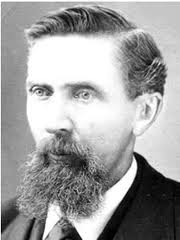
Conrad Kohrs
Between 1862 and 1864, gold was discovered in several places in southwest Montana. Prospectors came in droves and mining camps sprung up everywhere. Soon, there were thousands of miners to feed. Cattle ranches sprouted up all over western Montana to supply mining camps with meat. Most of the cattle were trailed from Oregon...Conrad Kohrs started as a butcher boy in a camp called Grasshopper Creek. When the rush to Alder Gulch began, he followed and established a beef market there. Kohrs eventually controlled and supplied the beef for nearly every gold camp. In 1866 he purchased the Grant ranch near Deer Lodge. He became the largest cattle owner in Montana and the entire Northwest.(2)

A native of Denmark, Conrad Kohrs emigrated at the age of 15 and eventually headed west in hopes of striking it rich like so many eager young men. With only some success in Canada and California, he joined the movement into western Montana and Grasshopper Creek where he realized the opportunities for wealth were greater by feeding the miners than competing with them. It was then he established a butcher shop and traveled around the territory searching for prime beef. He had several brushes with the highwaymen who plagued the isolated roads of Montana. Determined to stop these murderous bandits, Kohrs joined a group of Virginia City vigilantes, and helped track down and hang the outlaws. By 1864, robberies in the territory had plummeted.(3) Conrad was in need of land to house his growing cattle herd and purchased the Grant ranch near Deer Lodge, Montana in 1866 for $19,200 for the land, herds, buildings and equipment.(4)

The railroad into Montana, still a territory at this time, completed in the early 1880’s which made it possible to market the cattle and the roundups began, but not without serious challenges. Because of the challenges, Stockgrowers Associations were formed, the first in 1881. They discussed the Indians, predators, diseases, legislation and outlaws. The Indians were starving and often stole cattle; the white man had killed all their bison. Wolves were destructive predators, hunting in packs and killing cows, calves and many sheep and lambs.(2)

Conrad Kohrs, one of Montana's first cattle barons and greatest pioneers, passed away in Helena, Montana in 1920.

Quick Facts:
  • At age 15, he went to sea and over the next 17 years worked as a seaman, a butcher, a sausage salesman, ran log rafts down the Mississippi, and worked in a distillery.
  • Born in Holstein, he became a U.S. citizen in 1857.(5)
  • Sold by Kohrs grandson, The Grant-Kohrs Ranch was designated as a National Historic Landmark on December 19, 1960 to commemorate the Western cattle industry. The current park, created in 1972, is maintained as a working ranch by the National Park Service.(4)
  • The 1,500-acre park/ranch includes 90 structures, 26,000 artifacts and 100 shelved feet of business records kept since Kohrs acquired the ranch in 1866.(4)
  • Part of the original Grant-Kohrs Ranch, the land existing Rock Creek Cattle Company sits on was more specifically part of the Kohrs and Bielenberg Land and Livestock Company, which was sold in three large parcels after the dissolution of the Grant-Kohrs cattle empire.6
  • In 2008, Conrad Kohrs was deservedly inducted into the Montana Cowboy Hall of Fame.
  • Author Patricia Nell Warren is a descendant of Conrad Kohrs and lived on The Grant-Kohrs Ranch.

Conrad Kohrs in his living room
I can’t possibly do justice to the long history of cattle ranching in Montana or Conrad Kohrs extensive contributions to it, so I do hope that readers will take the time to learn more on their own.

Did you Know?
“Range Wars” between cattlemen and sheep growers didn’t happen in Montana. For a time, Montana cattlemen found it profitable to raise sheep. Then, when cattle became profitable again, they switched back to cattle. Montana ranges support a wide variety of grazing animals, both wild and domestic.(1) 

Sources:


Our thanks to MK McClintock! 

Please comment to be one of the three lucky winners.
Yes, THREE will win copies of Gallagher's Hope!  

Drawing will be September 15 at 9pm Pacific Time.  
If you don't leave your email address, we can't contact you, so we'll have to draw another winner.  

Sunday, September 9, 2012

MK McClintock: Gallagher's Hope

Gallagher's Hope
Gallagher Series, #2
by MK McClintock

McClintock is an entrepreneur, baker, photographer, tour host, reviewer and multi-genre author.

Over the years McClintock has traveled the country and abroad, experiencing the beauty of other lands and cultures. She dreams of a time when life was simpler, the land rougher, and the journey more rewarding. With her heart deeply rooted in the past and her mind always on adventure, McClintock will always call Montana home.

McClintock is a member of Romance Writers of America, Montana Romance Writers, and Women Writing the West.

About Gallagher's Hope

She sought a new beginning.
He sought what he didn't know was missing.
Together they would discover hope in unlikely places.

Isabelle Rousseau must escape New Orleans and the memory of her family's tragic loss. With her younger brother in tow, she accepts a position as the new schoolteacher in Briarwood, Montana. Desperate to keep what's left of her family together, Isabelle joins her life with a stranger only to discover that trust and hope go hand in hand.

Gabriel Gallagher lived each day as it came believing he had everything he could possibly want . . . until a determined woman and her brother arrive with a little luggage and a lot of secrets. It will take a drastic choice to protect her and give them both hope for the future.

RTW: What aspect of life in the Old West intrigues you the most? Did you work that into Gallagher’s Choice?

MKM: I like the simple idea of life in the old west. It was rougher and harder, but simpler and I believe, more rewarding because each and every accomplishment took so much effort. There is a bit of that in Gallagher’s Choice from the standpoint that life is much more difficult and the challenges harder to overcome, but the accomplishment and reward is so much more fulfilling. They don’t have computers, cars, and cell phones to ease their way—they’re tough, strong and they survive. I like that.

RTW: Is your life anything like the old west or do you only live it through your books?

MK McClintock, author
MKM: I live in Montana, so I probably have a better feel for it than many, but so much of it has changed and most of that ‘old west’ has been lost. I live not far from a dude ranch and once in a while you’ll see people in town wearing cowboy hats and riding horses down the road. I remember being on our small ranch in Colorado as a little girl, my sister and I would go out into the pasture and walk around on all fours with the horses or we’d play cowboys and Indians or bank robbers. It was a lot of fun—I’ve been hooked on the west ever since. These days I live it mostly through my writing and what I read.

RTW: Why must Gabriel take this story journey? What does he have to prove? Why is he the perfect match for Isabelle?

MKM: I’ll try not to throw out any spoilers...Gabriel actually appeared in the first book, Gallagher’s Pride, and so it’s not just him on this journey alone—it’s the family coming together for a common purpose. He does have his own story and in it, he must prove he’s not only strong enough to help the family find resolve, but also to quite literally save someone else’s family from their own worst fate. I matched him and Isabelle together because they have differing personalities and I enjoy opposites. She’s not someone he would have ever met had she not been facing her own set of circumstances and I appreciate when two people come together out of need or because of situations, not just because they’re attracted to one another.

RTW: How much actual history is in your book or is it purely all imagination?

MKM: Gallagher’s Choice has a bit more actual history than the first book did. Isabelle comes from New Orleans and not having been there I had to do some digging on what that city would have been like post-Civil War. There’s also a bit more of Montana history tied in, but only enough to lend the story credence. The rest is just me taking privilege with the west as I imagined it would have been (or hope it would have been).

RTW: Is every book in the series a stand-alone or do you need the next to understand the story?

MKM: You certainly can read as stand-alone, but I did write the books as a continual story so you don’t get to know the final outcome until the last book in the series is complete. There’s a main antagonist throughout the entire series, though he doesn’t play a prominent role in each book. Of course each story will have their own minor antagonists to complicate their lives and help to bring the individual stories to a head. I’ve left the first two books with cliffhangers at the end, but that is because the story is immediately picked up in the next book. The third book in the series will bring a resolution to all story lines, though it won’t be the last book of the series. Because of the cliffhangers, I’ll likely offer all three books in one volume at some point.

RTW: Can you give us a little preview without spoiling the end?

MKM: Sure, this small bit is in the prologue.

Rousseau Mansion, New Orleans—October 1883

Nothing existed of the life she had known.

Her slender arm wrapped around the little boy’s shoulder and pulled him closer to his side. She could feel his slight trembling and wished more than anything that she could take away his sadness. They were alone in the world. They had each other, and she prayed that would be enough for them both.

They stood and listened as the priest gave the final blessing, and two men lowered the caskets into the ground. The few other mourners who had been kind enough to attend the funeral asked her to leave with them, but she needed the closure. She needed her eyes to see what her heart refused to accept. ”An unfortunate affair,” everyone called the incident for it wasn’t every day that a man murdered his wife and then shot himself. Isabelle wished not to think on the possible reasons why, but she couldn’t seem to help herself. She never imagined her family to be anything but happy. Their father’s death, however, revealed the truth. No one spoke of it with them of course, but the lawyer had made the situation quite clear.

They were penniless.


RTW: What a hook! Where can we buy this book?

MKM: Gallagher's Hope is available at Amazon in Kindle and Print

RTW: Do you only write westerns?

MKM: Actually no, though more than anything else at this point and it will be focus until the series is complete. I have another series set in Victorian England that I’ll complete after the Gallaghers, more historical western romances and then a trilogy set in 18th c. Scotland, so I’ll be busy!

RTW: What’s next? Will you have a sequel to Gallagher’s Hope?

MKM: Yes, there’s more to come for the Gallagher’s. The third book, Gallagher’s Choice. I have two more books planned for the series after that, but with completely stand-alone story lines. Beyond that, I’ll just have to way to see what the Gallaghers have in store for us.

RTW: Anything else you’d like to add?

MKM: Guests to this blog may comment for a chance to win a copy of Gallagher’s Hope! Three eBooks and three winners!

It’s been fun and a big hello to all our readers! Thank you RTW!

Our thanks to MK McClintock! 
Please comment to be one of the three lucky winners.  
Drawing will be September 15 at 9pm Pacific Time.  
If you don't leave your email address, we can't contact you, so we'll have to draw another winner.  

Sunday, March 11, 2012

M.M. Justus: Repeating History

Repeating History
by M.M. Justus
"A GRAND yarn you can't put down." Janet Chapple, author of Yellowstone Treasures

Romancing The West welcomes M.M. Justus who loves to travel, but when she's home, you'll find her quilting, gardening, or studying meteorology. Yellowstone National Park is one of her favorite places, and she lives within easy reach of her other favorite park, Mt. Rainier. You can read more about M.M. Justus on the bio page of her website.

RTW: So let's get started. Please tell us about your book.

MJ: Repeating History is about second chances. It's also about how heroes aren't always so heroic as the stories say. In Yellowstone in 1959, Chuck McManis, a college dropout and self-described failure, strolls past a geyser, gets hit by an earthquake, and is flung back in time 82 years into the middle of an Indian war and into his great-grandfather's life. He rescues/is rescued by the woman he comes to love, and sets out to fulfill the destiny laid out before him, only to discover that his past is where he really belongs after all.

RTW: What aspect of life in the Old West intrigues you the most? Did you work that into Repeating History?

MJ: I think the thing about the West prior to the 20th century that fascinates me the most is how the great distances isolated people, and how much of the country was still wilderness, or at least still wild. The "big city" in my story, Helena, Montana, was a three-day stagecoach ride from the nearest railhead in Utah during the time of my story, and a two-day trip from the head of navigation on the Missouri River. And yet, people didn't feel isolated, they still traveled, for pleasure as well as business, and went over the mountain to see what they could see. Several of the characters in my book went to Yellowstone National Park as tourists in 1877, which surprises many people when I tell them that Eliza is based on a real person (Emma Cowan). And, of course, after they were released by the Nez Perce, Eliza, her young sister Anna, and Chuck set out on the long trailless road to civilization -- and arrived there, after many adventures.

RTW: If you lived in 1877, what would you visit first? Is there something you’ve been curious about that you can’t find in your research sources?

MJ: I would head straight for Yellowstone, Indians or no Indians. I've tried to imagine what the park was like back in the days when it was brand-new, when it wasn't possible to bring even a wagon to Old Faithful because there was no road, when you might go for days without seeing another human being. I would love to experience it for myself.

There are complications with that scenario, of course, even if I could time travel as my hero does. For one thing, he was lucky he was male, and didn't have to wear long skirts and corsets, or struggle against inequalities of all kinds. For another, I wouldn't wish wandering lost in the wilderness for over a week or getting kidnapped by Indians on my worst enemy, and I have no desire to experience that for myself.

But to experience the wilderness that was Montana and Wyoming in the late 19th century would be absolutely majestic. I hope my characters appreciated it as much as I did, viewing it through their eyes.

RTW: If a person who had never read a Western (any sub-genre) asked you for a recommendation, what novel or movie would you recommend and why? What did the author do to bring the story alive for you?

MJ: I know it's horrifically idealized to the point of being a fairy tale or a fable, but I love Dances With Wolves, both the book and the movie. It's a journey story, and, as Repeating History proves, I am a sucker for a journey story. It has all of the best memes of the West, the beautiful wide open spaces (even after visiting South Dakota on several occasions, I had no idea it could be that beautiful), the good guys vs. bad guys (although the Indians/whites thing got turned on its head), and the strong, silent hero. The buffalo hunt sequence is shiver-down-the-spine country. And it has a terrific love story. It's just a lyrical movie, with the landscape as a full-fledged character. I think all of the best Western stories treat the land that way.

RTW: Why must Chuck McManis take this particular story journey? What does he have to prove? How does Eliza affect his journey?


M.M. Justus, author

MJ: I can't help grinning at this question. I am going to turn what you're asking me on its head about as much as Dances With Wolves did the Indian/white trope. Chuck doesn't take this trip. His trip takes him. He has nothing to prove, either. As a matter of fact, as the story opens, he's doing nothing more than trying to escape the wrath of his father for a few days before going home to face the music about having flunked out of college. After the earthquake, he's just trying to survive. In some ways, although it takes him a while to realize it, he's glad to have been yanked out of his dead-end life and into one where the way to make something of himself is laid out for him. He thinks all he has to do is put in the work. Not that the work doesn't come close to killing him a couple of times...

As for Eliza, she's destined for him, or so he thinks. But then there's one obstacle after another to challenge that predestination, until their relationship isn't anything like what Chuck thought it would be when he first met her. She's the symbol of everything he thought his new life was going to be, and she's the symbol of how it didn't turn out anything like he had expected. And she's really good at showing him how to get on in 1877, too.

RTW: You have an excerpt today--please set it up for us.

MJ: This passage takes place after Eliza, thirteen-year-old Anna, and Chuck, who is now Charley, have been kidnapped and released by the Nez Perce, out in the middle of nowhere with two exhausted ponies and very little else.

Eliza slid neatly off the horse's back and it struggled to its feet. She tried to stay upright, but she’d have gone down in a heap if I hadn't grabbed her arm. As it was, she hung off of me like a deadweight for a moment before she righted herself and stood, swaying.

She looked like she was about at the end of her rope. No pun intended.

Her once-tidy dress was stained and torn. Her hair hung in ropes around her shoulders. The only word I could think of to describe her face was painful. Her eyes were hollow and somehow full at the same time, of things I didn't think anyone should have to endure.

"It was my second anniversary," she whispered suddenly.

"Huh?"

"Sister, don't," said Anna, who had materialized at Eliza's other shoulder.

Eliza went on as if neither one of us had spoken. Her voice was deceptively calm, at first. "Our second wedding anniversary. William--Mr. Byrne," she added, as if we wouldn’t have known "was shot on our second anniversary. That's why we were here. I'd always wanted to see the geysers, ever since I was a little girl when an old mountain man came to visit us. So when William asked me what I would like to do to celebrate our anniversary, I wanted to come here. We didn't have a honeymoon, so this was supposed to be it."

Then her voice cracked for the first time. "And now he's gone." Her words dissolved into tears and she turned to me. Me, not Anna. I wrapped my arms around her and held her as she wept.

Anna stood rooted, her eyes wide open and staring at me over her sister's head. I tried to look reassuringly at her, but I know I didn't succeed.

"Sister?" she asked, all the fear I realized she'd been masking, too, in her voice. Frontier women. They were human, too. They'd just been trained not to show it.

"She'll be okay," I said, as much to convince myself as Anna. "Eliza? I'm sorry. Dammit. Anna won't care if I use your first name."

Eliza raised her head. She swallowed, hard. The tears had run new streaks down her face through the grime, but her eyes didn't look hollow anymore. I wanted to kiss her. Make it all better, somehow.

She backed up slowly. Her reluctance drew an unwilling smile from my lips. "Better now?"

She reached into the pocket of her skirt and drew out a handkerchief. It wasn't all that clean, but it was cleaner than her face, which she wiped with it. It didn't take her long to pull herself together.

"Thank you, Charley," was all she said, but it made me feel ten feet tall.

RTW: Terrific! Where can we purchase this intriguing story?

MJ: Repeating History is available at Amazon, Barnes & Noble, and Smashwords.

RTW: What’s next? Is Repeating History a part of a series?

MJ: Yes. It's always been the first book of three in my mind, although because the second book's hero is Chuck's son/grandfather, and the third book's hero is Chuck's father/grandson (I hope that's not too confusing -- I tend to think of the whole thing as a mobius strip), it's a series only in a fairly loose sense of the term. The second book, True Gold, will be coming out this summer. It is set in 1897-98, on the trail to the Klondike Gold Rush. The third book, Finding Home, is set in 1959, back in Yellowstone, in the days after James finds out that his son ran away and is missing in the aftermath of the earthquake, and will be coming out the end of this year or early next.

RTW: Anything else you’d like to add?

MJ: Just that I've really enjoyed being here. Thank you for having me.

You're welcome, any time!

Stay tuned for Thursday's article when M.M. Justus takes us on a journey through Yellowstone.

Wednesday, February 15, 2012

Tough Times in the Old West: The Great Die-Up


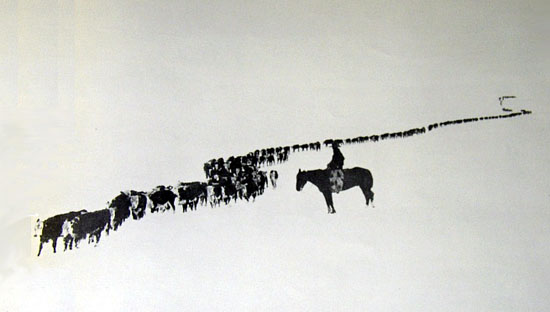
When we think of the Old West, we think of cowboys, cattle drives, open range, and wild times. And, from 1865 to 1886, this would be an accurate description. Then came the Great Die-Up, which many call the end of the Old West and the beginning of a different way of life. So what happened?

The demand for beef had grown steadily and remained strong through the 1870s and early 1880s. Ranchers bred more cattle, and they bred for more weight and meat rather than hardiness. That meant the herds were larger than ever before. And hungrier.

Farmers moved in by the droves and strung barbed wire around their homesteads, leaving less and less land for grazing. Sheep herders brought their flocks, and sheep rip the grass out by its roots, leaving no food for cattle. And then the drought hit during the summer of 1886.  Hardly a blade of grass was left by mid-August, and many ponds shrank to alkalai water. 
By the fall of 1886, range land in the north (the Dakotas, Montana, and Wyoming) was greatly diminished in size by encroachments, the grass had been over-grazed for a couple years, and the drought killed what grass there was left.  Herds suffered even before the cold weather rolled in.

The winters of the previous decade had been uncommonly mild, but the ranchers didn't know that--only the Native Americans and the mountain men had any experience with the frontier. The cattle had wintered well without extra feed, and subsequently the ranchers quit stockpiling feed, which was quite an expensive endeavor.


So when the snows hit, and it snowed nearly every day in November of 1886, the cattle had to use their hooves to dig through the snow to uncover what meager grasses they could find. The already thin animals grew weak from hunger. The cattle that managed to live through the brutal months of November and December were greeted by a warm Chinook in January that melted the top layer of snow. Cattlemen who'd been standing by helplessly, with no feed in reserve, while their cows died by the dozens, thought they'd make it through the rest of the winter with their herds in fairly decent shape, or at least alive.

Then the temperatures dropped to -50 degrees Fahrenheit and lower, causing a layer of ice to freeze solid over the snow beneath.
"It was all so slow, plunging after them through the deep snow that way.....The horses' feet were cut and bleeding from the heavy crust, and the cattle had the hair and hide wore off their legs to the knees and hocks. It was surely hell to see big four-year-old steers just able to stagger along."
~~Teddy Blue Abbott
After the cattle had pawed down to the bare earth, seldom did they find anything to eat. Livestock invaded the outskirts of towns, eating whatever shrubs and bushes they could find. More snow came, more animals died, and despair spread over the land.

When warmer weather finally melted the snow and thawed the earth, rotting carcasses were scattered all over the landscape. Dead animals fouled the air, the creeks, and the streams. Over 50% of all the cattle alive in October, 1886, were dead by April, 1887--probably about a million animals. Many ranchers went bankrupt, and the rest struggled to hang on.

So ended the days of open range and a whole way of life. Ranchers fenced off vast acreages to grow hay and grain for their remaining herds. Itinerant cowboys had to find other work, or settle for being a ranch hand. More farmers moved in, bringing their wives, children, merchants, churches, and schools. Railroads built more tracks and provided service to more outlying areas.

Thus, the modern West was born. And so it is today.

Additional reading:
Woolgathering and Widdershins
PBS: Hell Without Heat
The Fence Post
History.com
Nativeamerican.co.uk (see some Charles Russell paintings)


Monday, October 10, 2011

Debra Holland: Starry Montana Sky

Starry Montana Sky
by Debra Holland
Buy links: Amazon Smashwords Barnes & Noble

Debra first visted Romancing The West a few months ago, and you can read her interview there.

RTW asked how her second book, Starry Montana Sky, came about. Here's her answer:

After I finished my first book, Wild Montana Sky, the members of my critique group and local RWA chapter told me I needed to have a second book ready for when the first one sold. I wanted to continue setting stories in my fictional small town of Sweetwater Springs, Montana during the 1890s, so I chose 1894, one year after the first book took place. Then I had to come up with a story idea.

While attending the Rose Parade on New Year’s day, I saw a small carriage pulled by miniature horse, and instantly knew I had to have them in my story. I sat on the bleachers watching the parade go by, and, at the same time, scribbling notes in my program. I decided my no-nonsense hero, Wyatt Thompson, would disparage the idea of the little horses. Then I had to figure out his backstory to know how he came to have that outlook on life. Wyatt has one daughter, Christine, whom he’s raised on his own, and he’s very protective of her.

I researched little horses and found that the Falabella breed of miniature horses existed in Argentina in 1894. So I had my heroine, Samantha Rodriguez come from Argentina to Sweetwater Springs, bringing six Falabella and her son. Then I needed to figure out Samantha’s life in Argentina, and how she ended up in Montana. I’ll give you a hint. She’s not a native Argentine.

Although Samantha had one son, she dreamed of adopting more boys like Jo March did in Louisa May Alcott’s book, Jo’s Boys. A brainstorming session (put on by my RWA chapter) with author Leanne Banks helped round out Samantha’s story.

As an idea for me, Leanne mentioned an article she’d read about Last Chance Ranch, which was a place for wayward boys. That suggestion clicked with me, and I knew that Samantha needed to have a ranch for her “last chance” boys.


Debra Holland

Of course, life doesn’t always work out the way you plan, and Samantha’s boys caused a lot of trouble, turning the town against her family. And you can imagine how Wyatt Thompson felt about having wayward boys on the nearby ranch, all too near his daughter. Yet Christine couldn’t resist those cute little horses. The conflict between Wyatt and Samantha flares up again and again, yet they’re drawn to each other despite the problems. In the end, the Falabella are going to help save the day and bring the two together.

For most of the time I was writing the book, it had the working title of Sam’s Boys. It wasn’t until almost the end that I came up with the title, Starry Montana Sky.

Excerpt of Starry Montana Sky: the scene in Starry Montana where the hero and heroine meet.
Copyright © 2011 Debra Holland

On Tuesday afternoon, Wyatt reined-in by the front of the livery stable, mentally consigning Reverend Norton and his good causes to the devil. Not that he had any fear the minister would actually be facing Old Nick. It’s just that Wyatt had better things to do with his time than play cowboy to a bunch of fancy Spanish horses belonging to the woman who’d taken over Ezra’s ranch--like dealing with the horses and cattle on his own ranch. But, he’d given the preacher his word.

He slid off Bill, looping the reins over the rail. He pushed open the barn doors, then stalked inside, peering through the gloom. Although he wouldn’t admit it to a soul, the idea of these South American horses had tantalized him. Maybe they’d be of high enough quality to add to his breeding stock.

A kitten skittered across the dirt floor, and he did a dance step to avoid tramping on it. “Hey, little fella. Watch where you’re goin’.” He reached down, scooped the kitten up, and cradled the furry body against his chest. Running a finger over the tiny gray head, he remembered his daughter chattering about the litter of kittens she played with whenever she stabled her pony before school. Maybe he should talk to Mack about taking this one home to her.

Still holding the kitten, he looked up. A quick scan showed familiar horses: Cobb’s bay, Banker Livingston’s team, Doc Cameron’s roan, the Appaloosa Nick Sanders rode to town, and a few of the horses Mack Taylor, the livery stable owner, rented out. No South American horses hung their sleek heads over the doors of the stalls.

With a grunt of annoyance, Wyatt set the kitten on the nearest bale of hay, turned on his heel and strode outside, rounding the corner toward the stable office. “Mack!” he bellowed, charging through the door.

Mack Taylor half rose from behind a table, where the remains of a meal rested, and wiped his gray-bearded mouth with his stained brown sleeve. Pepe, lounging against a wall, straightened.

Wyatt didn’t give him a chance to speak. “Where are those Falabellas? Did they arrive?”

Mack and Pepe exchanged glances. Mack straightened, amusement wrinkling his narrow broken-nosed face. He ran a hand through his grizzled shoulder-length hair. “Arrived right on time. No problem et all.”

“Then where are they?”

“In the stable where they belong.”

“No, they’re not. I’ve just come from there.” He took two strides into the room. “If you’ve gone and lost that widow-woman’s horses, the ones I took responsibility for---”

Mack raised a placating hand. “Now, Thompson. I ain’t never lost me a horse in my life. Never even had one stolen. Let’s just mosey out to the stable and have us another look. Perhaps you didn’t see ‘em.”

“You sayin' I’m blind? Those Falabellas aren’t there. I recognized every horse in the place.”

“Let’s us go look-see.” Mack stepped out from behind the table, yellowed green eyes squinting in amusement.

Pepe followed. Although the young man kept his eyes downcast, Wyatt could tell by the set of his shoulders, he, too, found the situation humorous.

Wyatt let them pass, then fell in behind, puzzlement creeping into his anger. Were they playing a joke on him? The top of his ears burned at the thought. While Mack enjoyed a laugh as much as any man, he wasn’t known for being a prankster.

He followed the two men through the doors of the barn. Sunlight filtered through the entrance and an open window above the hayloft--more than enough to illuminate the dim interior. He glanced down the row of stalls, again assessing and dismissing each curious occupant.

Just as he thought, no South American horses. With one part of his mind, he took stubborn satisfaction in being right. With another, he started worrying--a gut churning feeling of concern. Regardless of what he’d felt about the Spanish widow’s acquisition of Ezra’s ranch, he’d taken responsibility for her horses, and Wyatt Thompson took his responsibilities seriously.

He couldn’t even report them stolen. Nobody to take the report. With the retirement of Rand Mather six months before, Sweetwater Springs no longer had a sheriff. Wyatt would have to track the thieves down himself. And how could he explain this to Reverend Norton, much less to the widow?

Mack leaned over the nearest empty stall. “There ya are, little fella. Thompson here worried ya done gone and disappeared on us.”

What the…? Wyatt stepped beside him. It must be a foal, he thought assessing the tiny brown animal with the black mane and tail. But his experienced eye dismissed that thought almost as soon as it came. This compact miniature horse didn’t possess the unfinished stick-legged look of a foal.

Mack glanced at Wyatt’s stunned face and cackled. Pepe’s soft laugher joined his.

“Midgets?”

“Yep, midget horses. Damned strangest thing I ever did see. Cute little critters, though. Look at the rest.”

Wyatt strode down the aisle, peering over the top of the stalls. Black, chestnut, brown, dappled gray, and a cream-colored one with black legs, mane and tail.... None of them stood higher than his hips.

The burning sensation spread from his ears, across his forehead, and into his cheeks. Why hadn’t that widow woman mentioned midget horses? He ground his teeth. Not a good way to begin relations with his new neighbor.

From Mack’s continuous cackling as the man exited the barn, probably for the nearest saloon, Wyatt knew the story would be all over town in a matter of hours. The heat in his face singed the outside of his skin like a fresh sunburn. He had a reputation in these parts as a calm, logical man of substance. People respected him. He’d built a prosperous life, erasing the disasters and shame of his younger years. Now in just a few minutes, some Spanish widow had managed to overset his hard-earned serenity. And he hadn’t even met the woman! Wyatt turned and stalked down the aisle, keeping a wary eye out for the kitten.

From outside the door, a boy’s voice called, “In here, Mama.”

Before Wyatt had time to step out of the way, a young boy careened into him. Something jabbed into his side. He grabbed the boy’s shoulders before he could hit the ground and set him on his feet.

“Pardon, Senor.”

Wyatt surveyed his captive. A little overdressed for a weekday. He didn’t recognize the child, but he was familiar with the sticky red and white candy clutched in the boy’s hand. His daughter’s favorite. Wyatt glanced down at himself. Just as he surmised, a red stain blotched his once clean white shirt.

The boy’s gaze followed Wyatt’s. A chagrined look crossed his face. “Sentir ... I mean, sorry, sir.”

“Slow down, son, and watch where you’re going.”

“Yes, sir. Sorry, sir.”

A melodic woman’s voice asked, “Is there a problem?”

Wyatt looked up. The Spanish widow no doubt. Clad in black from head to toe, she clutched an armload of parcels and sacks. The shadows near the door obscured her features. He gave a gentle push to the boy, heading him back outside. “Perhaps you should wash up. Use the pump by the horse trough.”

Pepe rushed over. “Señora Rodriguez, let me take those for you.” He lifted the bundles out of her arms and disappeared outside. Popping back in the barn, he said, “Is there anything else I may do for you, Señora?”

“Non, Gracias, Pepe.”

“De nada, Señora.” Pepe hurried back out.

I should have helped her. Wyatt buried the quick spurt of shame under rising anger. She was the cause of his current predicament. “I take it you’re the owner of these midgets?”

She stepped into the light, and her beauty caught him in the gut--like a kick from one of her midget horses. Under her black straw hat, he caught a glimpse of flame-colored hair. Auburn brows and lashes framed wide blue eyes. A flush of peach crept into her cheeks and a determined chin, now lifted several inches higher than before, gave her a spirited demeanor. Not the withered, dark-skinned widow he’d been expecting.

“Falabellas,” she corrected.

“I don’t care what high fallutin’ name you give them. Those horses are midgets.”

“No they’re not.”

“What good are Falabellas anyway? Can’t even ride them.”

He caught the flash of her cornflower blue eyes and watched with appreciation as her bosom swelled with anger. She tightened her jaw and visibly forced herself to give him a civil reply. “They can pull a special buggy. And they’re very playful.”

“Playful?” His words dripped with derision. Shame brushed across his conscience, but not enough to stop him.

“Yes.”

“Who needs a playful horse? A good horse is a hard workin' horse.” Didn’t she know anything? She would never make a go of her ranch with her kind of horses.

“They’re very good with children. Although you might not approve of that either.”

He heard the civility slip from her voice and secretly smiled. There was a way to reach past her cool exterior. “If you’re implying that I don’t approve of children, I must inform you I have a daughter. Christine will be out of school in a few minutes, and you can meet her. Perhaps we can get these ... these....”

“They’re Falabellas.”

“I get the name. Falabellas. Do you herd them like sheep or lead them like donkeys?”

“Chico and Mariposa will pull the buggy,” she said, crisping each word. “The rest only need lead ropes. I’ll hire a horse for Manuel, my groom. If we keep the bigger horses to a slow walk, these will be fine. Although I don’t know what business it is of yours, Mr...?”

Beneath the chill in the widow’s icy blue eyes and cool voice burned a passion as fiery as her hair. He could sense it. Like the fires of hell, a man could be consumed by such a blaze. Might even heat up the cold emptiness inside him. He shoved that thought aside. Best focus on the matter at hand. “I’m the help you requested in your letter to Reverend Norton.”

He swept her a mocking bow. “Wyatt Thompson, at your service.”

And there you go--another great book from Debra Holland!  Be watching for the third book in her Montana Sky series this winter.

Make sure you don't miss any of her latest releases. Follow her on Twitter, Facebook, or her website.