Showing posts with label heidi m thomas. Show all posts

Sunday, January 29, 2012

Chicken Dinner: Rodeo, Boomtowns, and Masquerades

by Jacquie Rogers

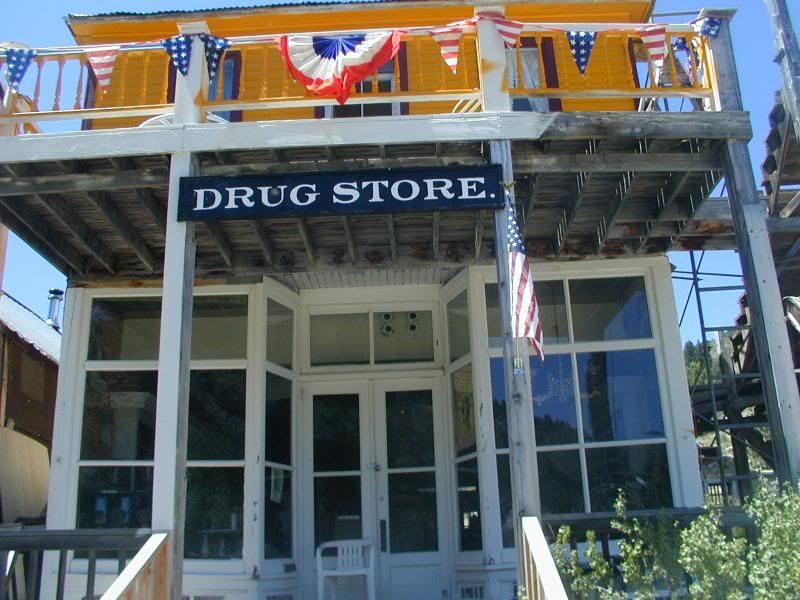
Boomtowns fascinate me because one day the land was pristine, but then the prospectors see color, tell someone about it, and within a matter of days, a whole city would be built. I grew up in a county that had several boomtowns, although only one has been preserved to any extent. Visit Cowboy Kisses and read about it: Silver City, Idaho Territory: Rowdy, Raucous, and Rich. Great pictures, too! My daughter took them. (Oh, and you still have time to win a free copy of Much Ado About Marshals!)

Speaking of Silver City, the newspaper (The Owyhee Avalanche) is still in business, and they have a feature called Looking Back... that gives us interesting insight into the people in the Old West. Here's an article from January 27, 1872:
THE MASQUERADE. The sheet and pillow-case masquerade ball last Wednesday evening, although not so largely attended as Silver City dancing parties usually are, was a complete success as far as real sociability and genuaine enjoyment were concerned. The affair was a novelty here, and, we believe, the first of a kind that ever took place in the Territory. Nothing occurred to mar the pleasure of the occasion. All who participated are immensely satisified and are in favor of having another of the same kind before the winter passes away.
Other news: and editorial in support of the 14th and 15th amendments to the Constitution; an announcement that the income tax law expired the next year and due to unpopularity, wasn't expected to be reenacted (rates: 2.5% on incomes over $2,000); and a cure for red noses caused by drinking (a French physician, Dr. Bernier, used electrical shockouch). Also, Texas newspapers urged the annexation of Mexico to the USA.

Thanks to Heidi M. Thomas for contributing such great articles this week. Her grandmother was an early rodeo cowgirlyes, they rode rough stockand wow, Heidi has some great insights and authentic history for you. If you haven't read her article yet, it's Rodeo: Cowgirls Compete With Men

 
Yes, we have a winner!
Janet O'Kane
She has her choice of
Cowgirl Dreams
or
Follow the Dream
Congratulations, Janet!


You Could Win a Kindle!

Romancing The West Cupid Party
February 6 to 12, 2012
Click here for Details

Wednesday, January 25, 2012

Rodeo: Cowgirls Compete With Men


Heidi M. Thomas, author
 Cowgirls Compete With Men
by Heidi M. Thomas
Copyright © 2012 Heidi M. Thomas

 
A petite young woman mounts a 750 to 900-pound steer, and hangs on to nothing but a rope tight-wrapped around one hand. That she stays on this bucking, twisting, snorting beast for ten seconds, eight seconds or even two seconds, seems a miracle.
 
This is the intriguing picture of my grandmother I have carried in the back of my mind since I was a little girl.
 
My grandmother, Olive May “Tootsie” Bailey, grew up the daughter of homesteaders during the early 1900s in the Sunburst-Cut Bank area of Montana, near the Canadian border and east of the Rocky Mountains.
 
Although she no longer rode in rodeos when I came along, “Gramma” was an avid horsewoman and ranch wife, equally at-home on the back of a horse as she was in a dress and heels. She and my grandfather, Otto Gasser, were partners in rural Montana ranching as well as an urban family of friends.
 
The 1920s were the heyday of rodeo, where the cowgirl was as much a part of the festivities as the cowboy. The first cowgirls learned to ride out of necessity to help on their family ranches. At an early age they learned to ride horses, rope cattle, and stay in the saddle atop an untamed bucking bronco.
 
In 1885, Annie Oakley, a diminutive sharpshooter in Buffalo Bill Cody’s Wild West Show, paved the way for other women to be recognized in the rodeo arena. Two years later, Bertha Kaelpernick was allowed to enter a horse race in Cheyenne’s Frontier Days only because the arena was so muddy the cowboys refused to participate. To entertain the crowd, she was coerced into riding a bucking horse.
 
Despite the terrible conditions, she managed to stay in the saddle, and put the men to shame. She continued to compete and often beat such legendary cowboys as Ben Corbett and Hoot Gibson.
 
Following in Bertha’s footsteps years later, Prairie Rose Henderson of Wyoming forced the Cheyenne organizers to allow her to ride. She went on to become one of the most flamboyant cowgirls of the era, dressing in bright colors, sequins and ostrich plumes over bloomers.
 
Lucille Mulhall, whose father, Colonel Zack Mulhall, ran a Wild West Show, was described in a 1900 New York World article as “only ninety pounds, can break a bronc, lasso and brand a steer, and shoot a coyote at 500 yards. She can also play Chopin, quote Browning, and make mayonnaise.” Both Teddy Roosevelt and Will Rogers have been credited with giving Lucille the title “cowgirl.”
 
Between 1885 and 1935, many women proudly wore that title and competed with men, riding broncs, steers and bulls. They also roped and tied steers (usually wearing long divided skirts) alongside their male counterparts.
 
In early rodeos, women and men competed in the same arena, drawing from the same stock. Women rode broncs, steers, bulls, and did steer roping as well as trick riding, Roman races and relay races.
 
I know that my grandmother, Toots Bailey Gasser, rode steers in small Montana rodeos. Other cowgirls, such as Marie Gibson, also from Montana, rode steers, bulls and broncs throughout the US, Canada and even London. While each cowgirl had her specialty, most participated in multiple events.
 
Vera McGinnis, Tad Lucas and Fox Hastings were probably best known for trick riding. This demonstrated numerous types of stands and vaults, performed while the horse was galloping at top speed. Other maneuvers included crawling under the horse’s belly, hanging just inches from the mount’s pounding hooves.
 
In the Roman race, the cowgirl would stand with her right foot on one galloping horse and her left foot on the other. (The horses would have had to be very well trained to stay together, and the rider obviously had great balance and strength.)
 
The relay race required three laps around a track, and the rider had to change horses, and sometimes saddles, after each round. If they weren’t required to change saddles, many cowgirls perfected the “flying” change, leaping from the back of one horse to the other without touching the ground. Vera McGinnis is credited with inventing this move. 

Bonnie McCarrol
thrown from Silver, 1915

After Bonnie McCarrol and Marie Gibson were killed and several other women badly injured in rodeo accidents, cowgirl bronc riding became increasingly rare in the West, leaving only relay racing open to women competitors. But women’s rodeo gradually eroded nationwide for several reasons:
  • Small, local rodeos were no longer financially lucrative and livestock was in short supply in the 1930s, leading to the demise of the Wild West shows.
  • Men held the central control of the sport.
  • Many well-known women rodeo stars retired.
  • World War II, with tire and gas rationing, did not allow travel as in the past.
From the mid-1930s until the late 1940s, cowgirls became mere props in rodeo, “glamour girls” whose beauty and attire were emphasized instead of athletic skill. In 1948, 38 women formed the Girls Rodeo Association (GRA) to give women an opportunity to compete in calf roping, barrel racing, and trick riding. In 1968, barrel racing finals were finally included in the men’s Professional Rodeo Cowboys Association (PRCA) National Finals.
 
In 1981 GRA changed its name to Women’s Professional Rodeo Association (WPRA) and today has more than 2,000 members. It sanctions 800 barrel races a year in conjunction with men’s PRCA rodeos. But women still do not compete with men.

As an entity of its own, Professional Women’s Rodeo Association (PWRA) puts on events in women-only rodeos that include bareback riding, breakaway and tie-down calf roping, bull riding, and team roping.
 
It’s been a long time coming, but as Rene Mikes, a corporate accountant from Denver and a bull rider, says, “It’s not a guy sport anymore.” But despite the heroic efforts of many women, including Cowgirl Hall of Fame and world champion bull rider Joni Jonkowski of Montana, women for the most part still do not compete with men.
 
Since the formation of the RAA in 1929, only one woman has qualified, within the PRCA’s point system, to compete in saddle bronc riding with men. That woman is Kaila Mussell from BC, Canada. She has been nominated to the Cowgirls Hall of Fame.
 
 
Heidi offers autographed copies at her website, or you can purchase Follow the Dream at these online stores: Amazon ~ Barnes & Noble ~ Treble Heart Books

 
Enter To Win
Your Choice Of
Heidi's Books!

 
Please leave a comment about a favorite western novel or a favorite strong character and you’ll be entered into a drawing for an autographed copy of your choice of Follow the Dream or Cowgirl Dreams.  The winning comment will be drawn 10pm Pacific Time, Saturday, January 28th.  Don't forget to include your email address with your comment or another name will be drawn.


Enter win a Free Kindle and Six Free Books!

Sunday, January 22, 2012

Heidi M. Thomas: Follow the Dream

Follow the Dream

Romancing The West features Heidi M. Thomas whose book Follow the Dream is about one of my favorite topics, cowgirls and their roles in early rodeo and ranching. These ladies were tough! I urge you to check out Heidi's carefully researched novels and read a little about her background and then you'll see why these books are so highly recommended.

RTW: Welcome, Heidi! Let's start with a blurb for Follow the Dream, the second book in the series.

HMT: In this sequel to Cowgirl Dreams, Nettie marries, yet faces challenges to her lifelong rodeo dreams. She must cope with personal tragedy, survive drought, and help Jake keep their horse herd from disaster. Will these challenges break this strong woman? As with Cowgirl Dreams, this story is based on the life of the author’s grandmother, a real Montana cowgirl.

Contest!
Find out how to enter at the bottom of this article.

RTW: What aspect of life in the Old West intrigues you the most? Did you work that into Follow the Dream?

Heidi M. Thomas, author
HMT: The way people lived in those days with such hardship and difficulty and yet emerged strong, independent and happy. Yes, that is a strong theme in both my books.

RTW: If you lived in the 1930s, what modern convenience would you miss the most?

HMT: Probably the computer. I don’t know how I used to write without it!


RTW: Why must Nettie take this story journey? What does she have to prove? What about Nettie most intrigues you?

HMT: Nettie has to learn that dreams can change, but that no matter what, a person needs to have a dream to work toward. She needs to prove her own worth to herself. Nettie’s strength and perseverance have been inspirational to me personally.

RTW: Please tell us a little about the excerpt you are sharing with us today.

HMT: Montana has experienced several years of severe drought and Nettie and Jake are faced with trying to save their herd of horses.

Sunday, August 10, 1930

Dust still blowing. Will it ever stop? So long since we’ve had even a drop of rain. Worried about the horses. Not much grass left. Jake’s not himself….
Nettie stopped writing. What was that noise? A low clicking hum. The wind? No. She’d never heard it like that. The sound grew louder. She stood and went to the window.

At first she didn’t see anything. The air hung hot and still. Her mind filled with confusion. Then a movement down by the corral caught her eye. A dark river of motion, flowing, clicking, humming.

Grasshoppers.

Nettie sprinted for the door. “Neil! Where are you?” Frantic, she ran toward the barn. “Neil!”

“Here I am, Ma.” His small voice came from the hayloft. He pointed to the mass off to one side. “What’s that?”

She climbed up the ladder inside the barn and sat beside him. “Grasshoppers, honey. They won’t hurt you.” The whirring, low-flying cloud clung to the ground, slowly moving through small patches of withered grass, leaving the ground as bare table-top, swarming over the corral fence. What was left of the posts stood like skeleton bones, stark and fragile.

Her son’s eyes were wide, pools of gray-green in the dim light. “What are they doing?”

“They’re eating.” Revulsion fought her calm words.

“Why did they eat the corral poles?”

“Because there aren’t any crops and not much grass left.” She tried to still the fluttering fear inside her stomach. Now there won’t be any grass left for our horses.

Nettie and Neil watched until darkness settled around the path of destruction left in the insects’ wake. Jake rode in from town and found them still sitting in the open door of the hayloft.

RTW: Thanks for the excerpt, Heidi! Where can we buy Follow the Dream?

HMT: I offer autographed copies at my website, or you can purchase the book at these online stores:

RTW: Will you have a sequel to Follow the Dream, a third book in the series?

HMT: Yes, I’m working on a third in the series, Nettie’s Cowgirls, which will take place during the 1940s and show the demise of women’s rodeo. But in this book, Nettie is a mentor to young aspiring cowgirls, trying to keep the dream alive.

RTW: Anything else you’d like to add?

HMT: The first two books in my series are based closely on my grandmother’s life and all will feature strong, independent women from Montana—my role models. They are also about having a dream and following it, even if it changes along the way.

RTW: Thanks so much for stopping by Romancing The West today, Heidi. I'm looking forward to your article on Thursday, Cowgirls Compete With Men. Early days of rodeo when both men and women competed is a fascinating and often overlooked topic.

Enter To Win
Your Choice Of
Heidi's Books!

Please leave a comment about a favorite western novel or a favorite strong character and you’ll be entered into a drawing for an autographed copy of your choice of Follow the Dream or Cowgirl Dreams.

Fine print: USA mailing only. Drawing will be held at 10pm Pacific Time, Saturday, January 28th.

Want to win a Kindle and Six Free Books?
Come to the Romancing The West Cupid Party Feb. 6-12!